Your Brain Wasn’t Designed for Constant Input
Mar 03, 2026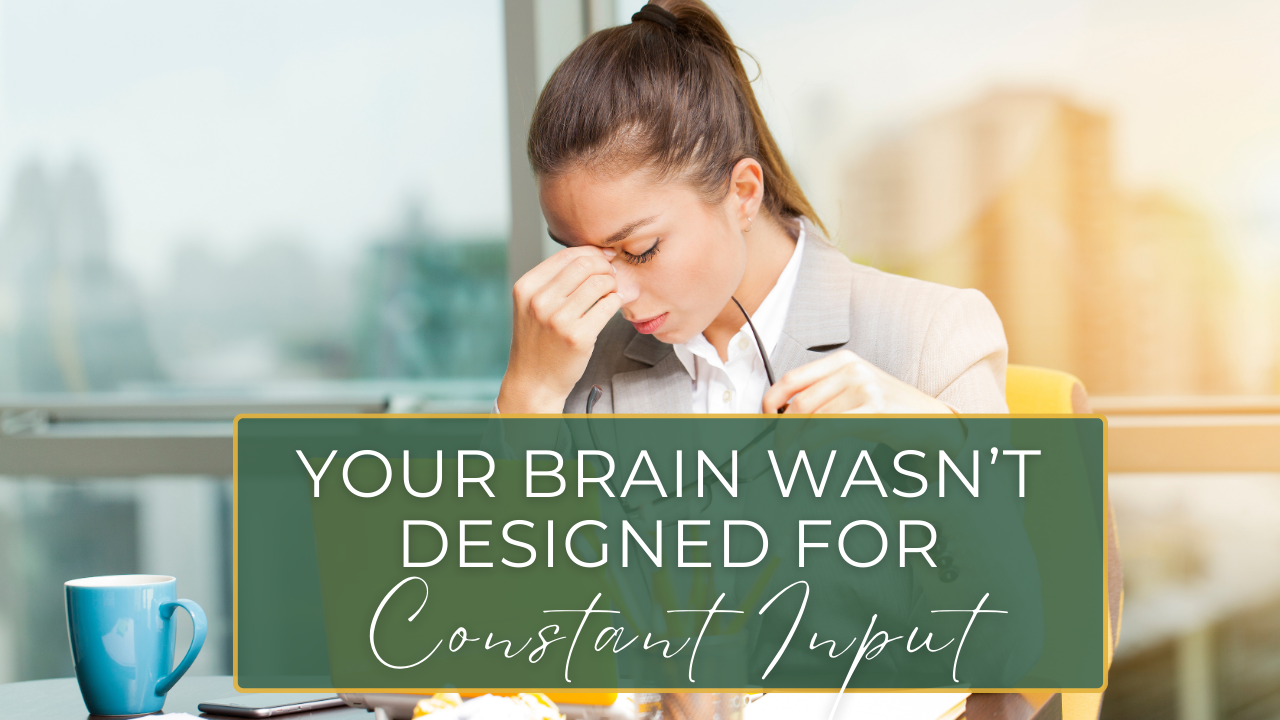
Quick question. Answer honestly, I'm only trying to help :)
How many tabs are open right now?
Not just on your browser.
In your head.
Ideas you haven’t started.
Projects you haven’t finished.
Articles you meant to read.
Skills you want to learn.
Messages you need to respond to.
Multipassionates honestly don’t just manage tasks. They manage simultaneous cognitive streams.
And your brain was not designed for that level of sustained input to stick around.
············································································································································
The Hidden Cost of Being Mentally “On” All the Time
There’s a term in cognitive psychology called cognitive load.
It refers to how much working memory your brain is holding at once.
Working memory is limited. Not metaphorically. Biologically.
Research suggests most people can actively hold about 4–7 pieces of information at a time before performance drops.
Now think about how many conceptual threads your brain tracks daily:
-
Career direction
-
Skill development
-
Creative ideas
-
Social obligations
-
Personal growth
-
Financial planning
-
Identity questions
Multipassionates often exceed working memory limits — not because they’re disorganized, but because they’re interested in many domains simultaneously.
The result?
-
Mental fatigue
-
Irritability
-
“Random” emotional dips
-
Decision paralysis
-
Feeling overstimulated even when sitting still
Not because you're weak, but because your cognitive bandwidth is overloaded.
············································································································································
The Stress Response Piece No One Mentions
When cognitive load stays high for too long, your brain interprets it as unresolved threat.
The amygdala increases vigilance.
Cortisol rises.
Your system shifts into low-grade stress mode.
This doesn’t always feel dramatic.
It often feels more like:
-
Being slightly on edge
-
Snapping more easily
-
Avoiding tasks you care about
-
Wanting to scroll instead of think
Your brain is protecting itself from serious overload.
············································································································································
Why Multipassionates Feel This More Intensely
You’re pattern-sensitive. That's a great thing!
You don’t just see what’s in front of you.
You see all the little bits and pieces and big pictures that it connects to.
But it also means every idea branches into five more.
Which multiplies cognitive load quickly.
Without intentional containment, curiosity turns into constant background processing.
And background processing burns energy.
············································································································································
The Shift That Changes Everything
The goal is not to think less.
It’s to contain more.
Containment reduces cognitive load because your brain knows:
-
where things live
-
when they’ll be revisited
-
what is active versus parked
This is why external systems matter so much for multipassionates.
Not for productivity.
For nervous system regulation.
When ideas are captured, categorized, and assigned phases, your brain relaxes.
It no longer has to hold everything at once.
············································································································································
A Simple Cognitive Reset You Can Try
Right now:
-
Write down every open loop in your head.
-
Circle only what is active this week.
-
Draw a box around everything else.
-
Label the box: “Not Now — Safe.”
You will likely feel your shoulders drop.
That’s not a placebo or trick. That’s reduced cognitive load.
············································································································································
Where Structure Comes In
This is exactly why I teach multipassionates how to build containers for their ideas instead of trying to discipline themselves into focus.
When your life has visible structures for:
-
rotation
-
phases
-
review points
-
parking lots
your brain stops scanning constantly.
The free class below walks through the foundation of that system — not rigid scheduling, but layered containment that protects your curiosity instead of suppressing it.
Because your brain doesn’t need less interest.
It needs fewer open loops.
············································································································································
Mental overload is not a character flaw.
It’s a systems issue.
Your brain is powerful.
It just wasn’t designed to carry everything at once.
Contain the streams. And watch your clarity return.
See you soon,