
The Forest Is Stranger Than You Think
Sep 25, 2026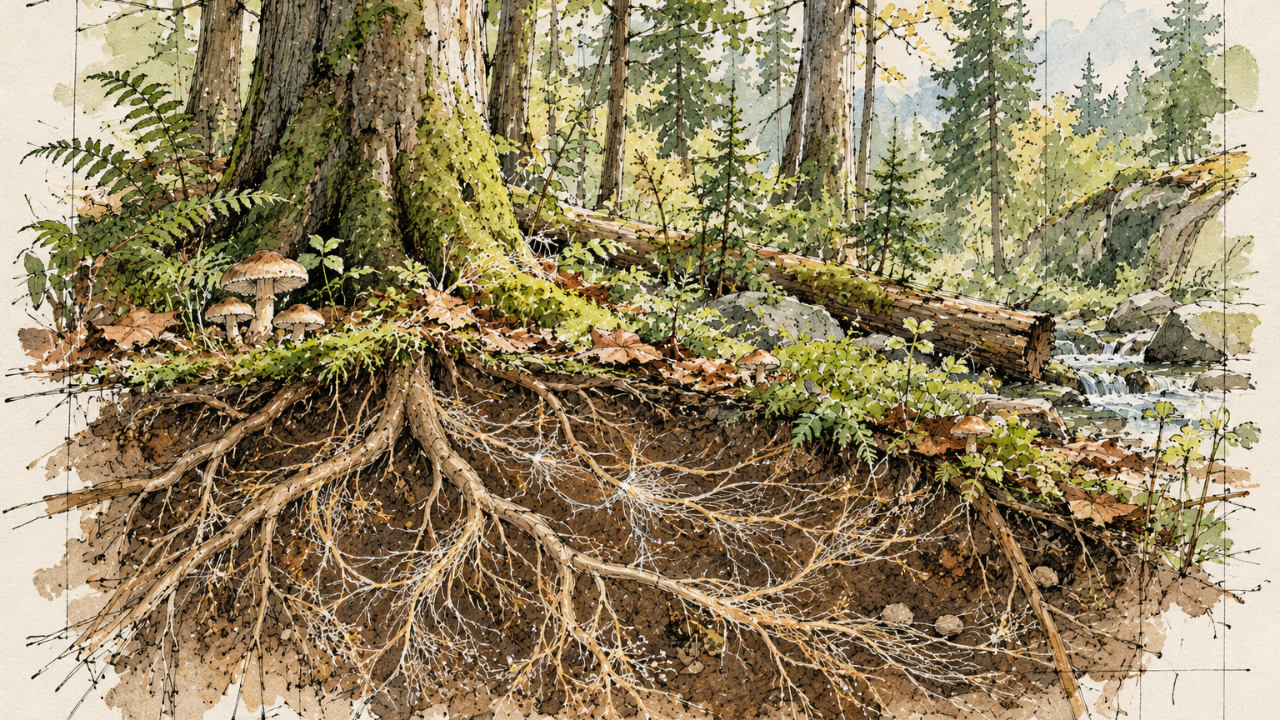
The next time you walk through a forest, I have a small request.
Look for something that doesn't make sense.
A flower growing where there's barely any sunlight. A mushroom that seems to have appeared overnight. A fallen tree with a miniature forest growing out of its back.
Or perhaps a perfectly ordinary tree that has somehow forgotten to drop its leaves in the middle of winter.
Forests are full of these little oddities. Most of us walk right past them, partly because we're distracted by the scenery and partly because we have no idea there's anything unusual to notice.
Which seems a shame, really.
Because once you start looking closely, a forest becomes an entirely different place.
And some of its residents are behaving in ways that are, frankly, a little suspicious.
1. That Mushroom Is Probably Only the Tip of the Iceberg
Let's start with something familiar.
A mushroom.
You spot one poking through the leaf litter, perhaps with a little brown cap or an impressive collection of spots. You admire it, maybe take a photograph, and continue walking.
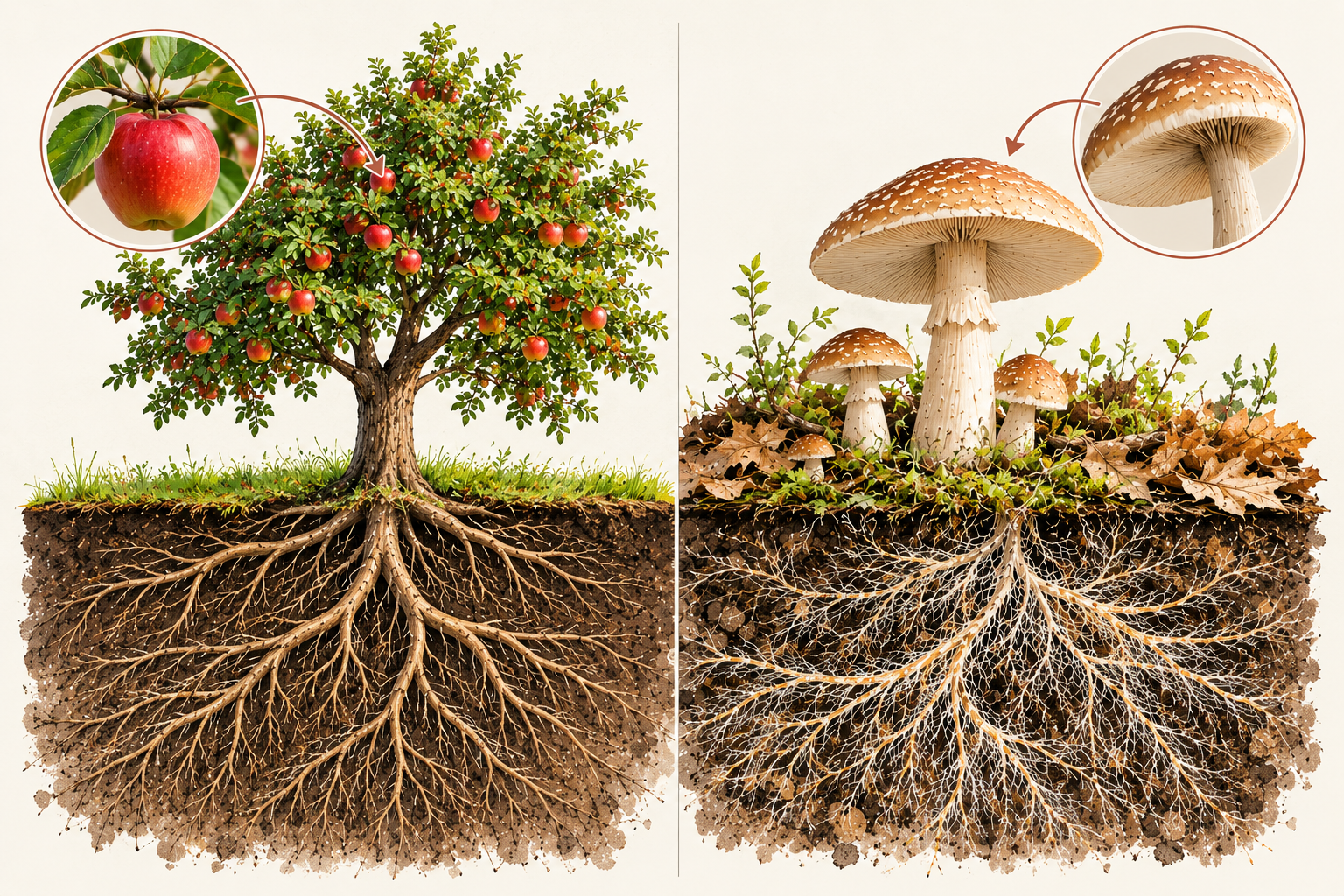
But here's the interesting part: the mushroom you see may be only a small, temporary part of a much larger organism.
Many fungi spend most of their lives hidden in soil, wood, or other material, growing as networks of microscopic filaments called hyphae.
Together, those filaments form a mycelium (there will not be a test after this but bear with me).
The mushroom is a reproductive structure. Its job is to produce and disperse spores, which can help the fungus reproduce and spread.
Think of an apple tree.
You wouldn't assume the apple was the entire organism. You'd recognize it as something produced by a much larger living thing.
For many fungi, the mushroom is a bit like the apple.
Except the rest of the organism is usually hidden.
And the next time you see several mushrooms growing near one another, consider this: they might be separate fungi, or they might be fruiting bodies produced by the same underground individual.
You generally can't tell just by looking.
Which means a cluster of mushrooms might be less like a little neighborhood and more like one very enthusiastic resident putting up decorations.
Here's another detail I love.
Some fungi form partnerships with tree roots, helping plants obtain mineral nutrients from the soil while receiving carbon compounds in return.
These are called mycorrhizal relationships, and they're extraordinarily important in many ecosystems.
That mushroom you see beside the trail might belong to a fungus involved in a relationship with a nearby tree.
Or it might be decomposing dead wood or leaf litter. Or it might be doing something else entirely.
The mushroom isn't enough to tell us the whole story.
Something to notice: The next time you find mushrooms, look at where they're growing. Are they emerging from soil, a fallen log, or the base of a tree? That won't identify the fungus, but it gives you your first clue about its possible way of life.
And please admire unfamiliar mushrooms without tasting them. Some fungi are considerably less charming once eaten.
2. Some Flowers Have Apparently Opted Out of Photosynthesis
Now, imagine you're walking through a damp, shady forest and spot something pale emerging from the ground.
It's almost translucent.
The stem is white, the flower droops downward, and the whole thing looks as though it belongs in a ghost story.
You might assume it's a fungus. Perfectly reasonable guess.
You'd be wrong.
Meet the ghost pipe, Monotropa uniflora.
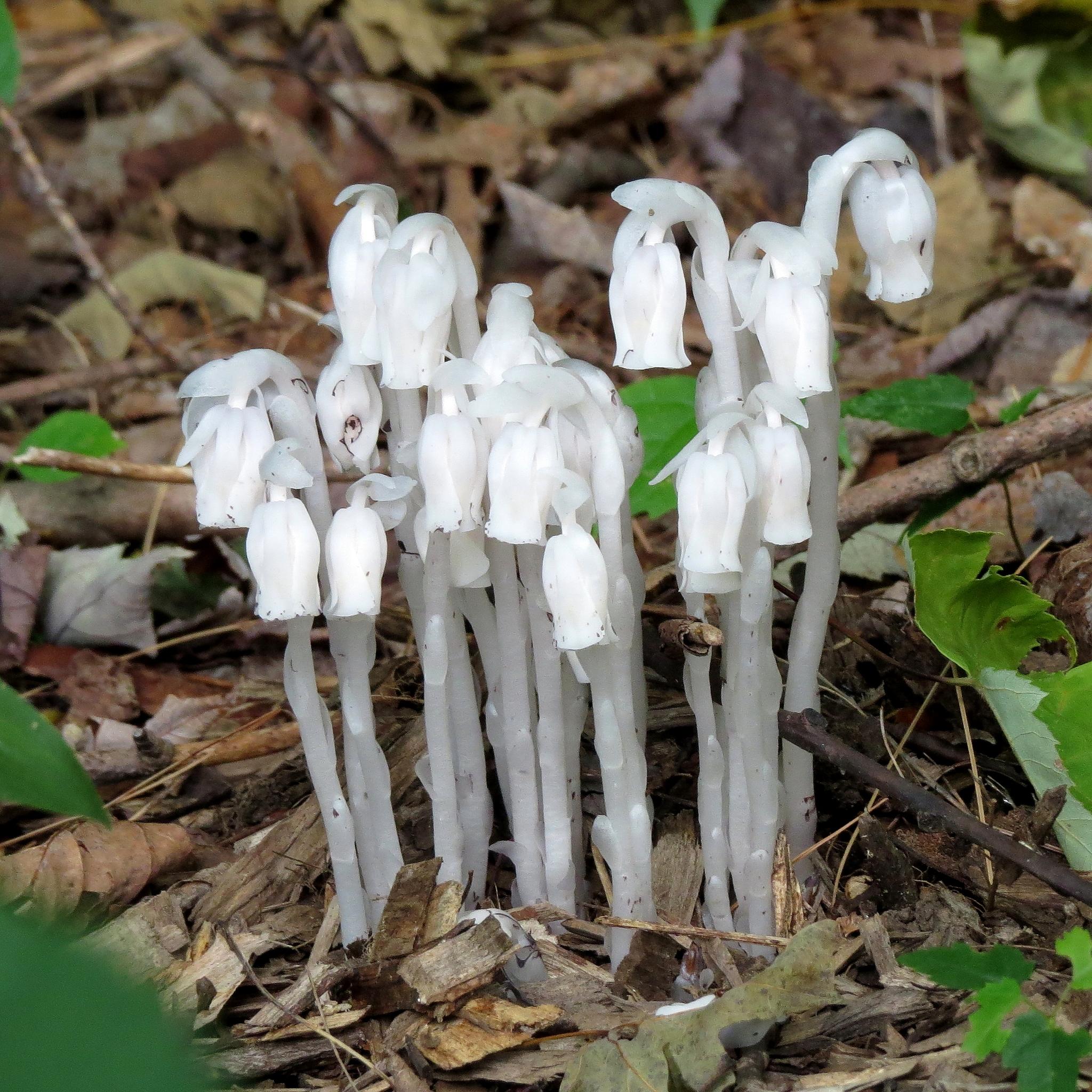
It's a flowering plant. And unlike most plants, it doesn't contain chlorophyll, the green pigment essential to ordinary photosynthesis.
Which raises an obvious question, right?
How on earth is it getting its food?
The answer involves fungi. Ghost pipes obtain carbon and nutrients through associations with certain mycorrhizal fungi, which are themselves associated with trees.
In simplified terms, carbon originally in a photosynthesizing tree can reach the ghost pipe through its fungal partner.
The ghost pipe is taking advantage of an existing biological relationship without making its own sugars through photosynthesis.
It's a strategy called mycoheterotrophy.
And it's not unique to ghost pipes. Some orchids have also evolved ways to obtain carbon from fungi, either throughout their lives or during particular stages of development.
Plants, apparently, have more than one approach to meal planning.
What I find especially wonderful about ghost pipes is that they look unusual for a reason.
Their lack of green pigment isn't simply a peculiar aesthetic choice. It's connected to an entirely different way of obtaining energy.
The plant is practically advertising that something interesting is happening.
Although I doubt that's its intention.
Something to notice: If you're walking through a forest where ghost pipes occur, watch for pale, waxy-looking flowers emerging from the leaf litter, often in shaded places. They aren't mushrooms, even though they may look like them.
And leave them growing where you find them. Their relationships with fungi make them particularly difficult to cultivate outside their natural habitat.
3. A Fallen Tree Might Be Running a Nursery
Let's say you encounter a large fallen tree.
Its bark is peeling, moss covers the trunk, and the wood has begun to soften.
At first glance, it looks like the end of something.
The tree fell. The tree is decomposing. Eventually, the tree will disappear into the forest floor.
Except sometimes, if you look closely, you'll discover something growing directly out of it.
A fern.
A little shrub.
Perhaps several tiny trees, all lined up along the length of the fallen trunk.
Congratulations. You've found a nurse log.
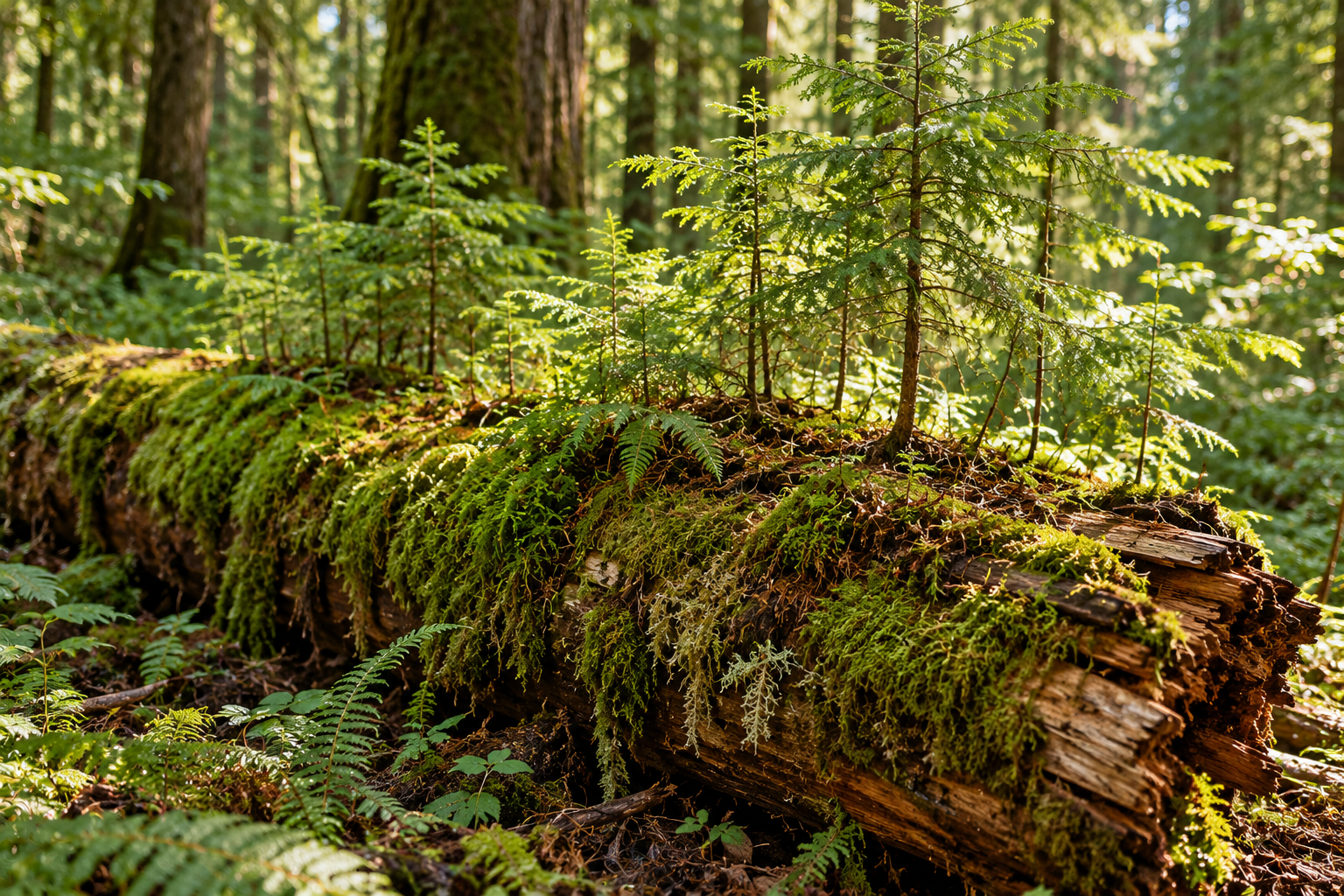
A nurse log is a fallen tree or large piece of decaying wood that provides a growing site for new plants.
In some forests, especially the moist forests of the Pacific Northwest, these logs can play an important role in helping seedlings establish themselves.
And there's a fascinating reason for that.
The forest floor can be a surprisingly difficult place to start life.
Seedlings compete with SO MANY other plants. They encounter dense vegetation, variable moisture, and all sorts of obstacles.
A decaying log may provide a raised surface where seeds can germinate with less competition from certain ground-layer plants.
As the wood breaks down, it can also retain moisture and contribute organic matter and nutrients.
You might see a line of young trees growing along a single fallen trunk, almost as though someone planted them in a row.
Nobody did.
Well, unless you count the fallen tree.
Which seems to have started a gardening project after its own death.
And here's where things get even stranger.
As a nurse log continues decomposing, the young trees growing on top of it may develop roots that extend down around the old trunk.
Eventually, the log can decay almost completely, leaving the trees standing on elevated or oddly shaped root structures.
The original nursery has disappeared.
But the architecture of the roots can preserve evidence that it was once there.
Something to notice: Look for seedlings growing directly on fallen logs. In older forests, you might even find trees with unusual exposed roots that hint at a long-vanished piece of wood beneath them.
A forest doesn't always erase its history. Sometimes it leaves the evidence standing.
4. Some Trees Refuse to Let Go of Their Dead Leaves
Here's a little mystery you can investigate without waiting for spring.
Go for a walk in a deciduous woodland during winter.
Most of the trees will be bare. But every so often, you may notice one still covered in dry, brown leaves.
Not green leaves, these are fully brown and dead ones.
Leaves that have apparently missed the memo about autumn.
This phenomenon has a wonderful name: marcescence.
Marcescence is the retention of dead plant parts, especially leaves, that would normally be shed.
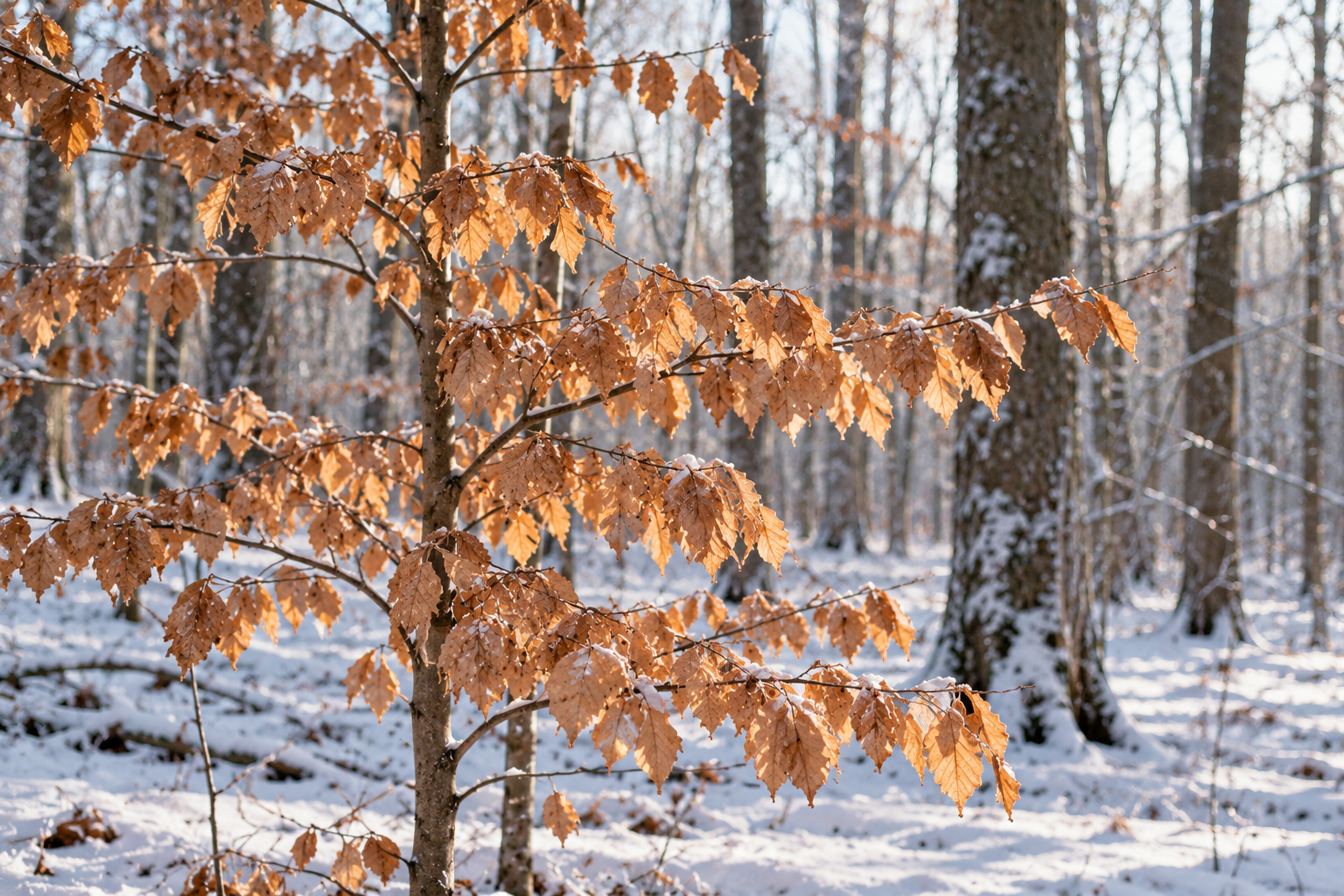
It's particularly noticeable in some oaks and beeches, although it also occurs in other trees.
You may see a young beech tree covered in papery tan leaves long after the surrounding trees have dropped theirs.
Or an oak with clusters of dry leaves clinging stubbornly to its lower branches.
And naturally, scientists have wondered why.
One possibility is that retaining leaves helps protect buds and twigs from browsing animals such as deer.
Another is that leaves falling later might influence when nutrients return to the soil.
But these explanations aren't universally established, and the causes and potential advantages of marcescence remain subjects of investigation.
There's also a more immediate explanation for how it happens.
Normally, deciduous trees form a specialized separation layer near the base of each leaf stalk, allowing leaves to detach.
In marcescent leaves, that separation process isn't completed in the usual way before winter.
The leaves remain attached, sometimes until spring growth helps dislodge them.
Which means a tree can spend an entire winter looking as though it simply hasn't gotten around to cleaning up.
I find that strangely endearing.
Something to notice: On a winter walk, look for young beeches or oaks holding onto their dry leaves. Notice whether the leaves are distributed throughout the tree or concentrated on lower branches.
And listen when the wind blows.
A tree full of dry leaves has an entirely different soundtrack from one with bare branches.
5. That Chewed Leaf Might Be Part of a Chemical Drama
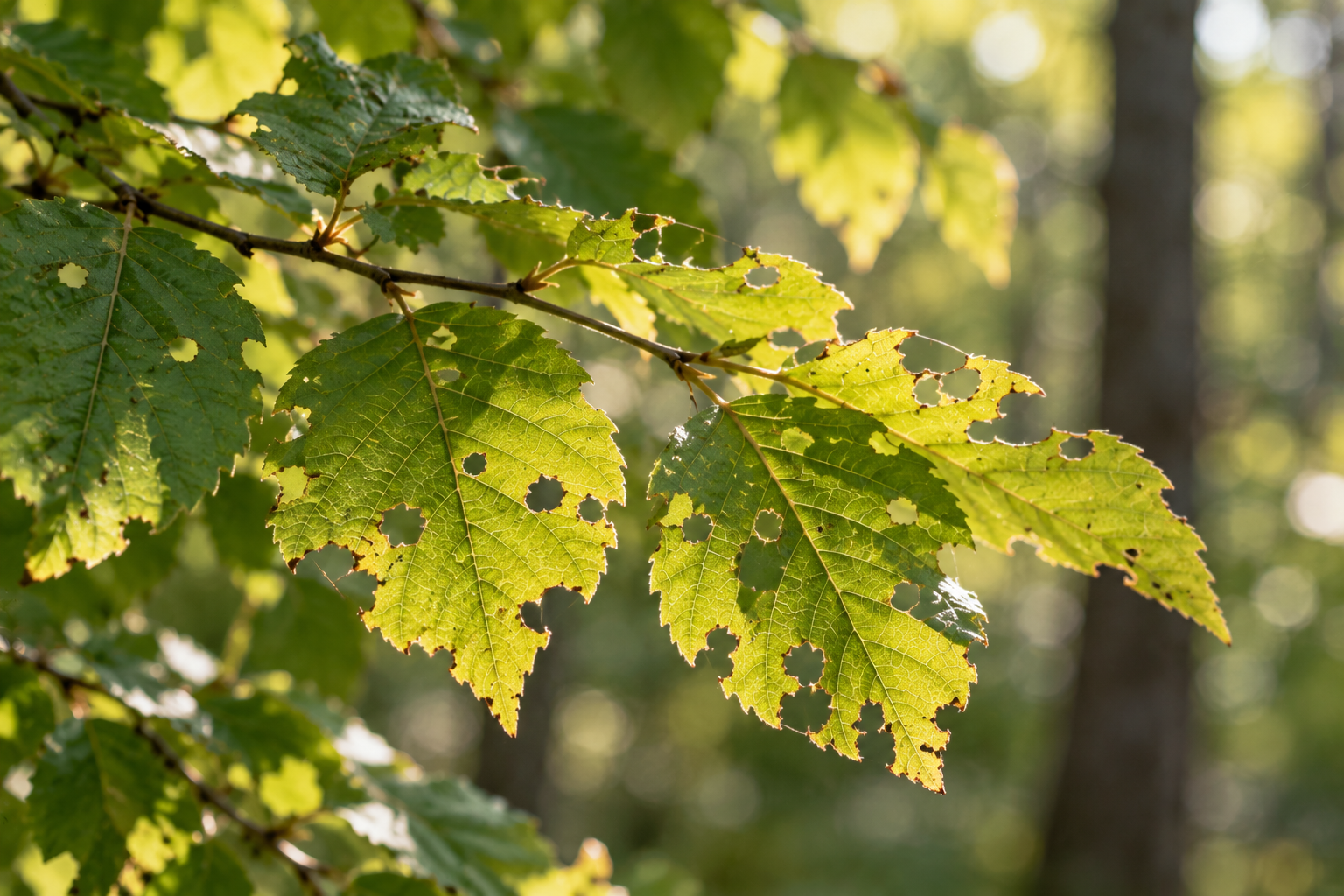
Imagine finding a leaf with several holes in it. A caterpillar has clearly been enjoying lunch.
You might feel mildly annoyed on the plant's behalf, but otherwise, there's not much to see.
Except the plant may be doing something rather interesting in response.
When insects feed on certain plants, the damaged plants release mixtures of airborne chemicals called volatile organic compounds.
Some of these compounds can influence the behavior of other organisms.
In certain plant-insect relationships, the chemicals released after damage help attract predators or parasitoids of the insects feeding on the plant.
Imagine a caterpillar eating a leaf while the plant releases chemical cues that a nearby wasp can detect.
The caterpillar may have inadvertently helped advertise its own location.
The salad has apparently called for backup.
And the story doesn't necessarily end with the insects.
Researchers have found that some plants respond to airborne chemicals released by damaged neighbors.
A scientific analysis of 48 studies found overall evidence that exposure to volatiles from damaged plants could increase resistance to herbivores in nearby plants.
The results varied by study, and effects were generally stronger in controlled settings than in natural field conditions.
But it's still remarkable.
A plant doesn't need eyes, ears, or a nervous system to detect chemical changes in its surroundings.
Of course, scientists are careful about calling all of this communication.
A plant releasing chemicals after damage isn't necessarily deliberately warning its neighbors.
Sometimes another organism simply detects a chemical cue and responds.
Think about smelling smoke. The fire isn't trying to tell you anything.
But you've received some very useful information.
Something to notice: Look for leaves with chewing damage, especially if the insect is still nearby. You can't see the chemical interactions themselves, but knowing they may be happening changes the scene considerably.
6. The Underground Internet Isn't Quite What We've Been Told
By now, we've encountered fungi partnering with roots, flowers borrowing carbon through fungi, and plants responding to airborne chemicals.
So you might be wondering about something you've heard before.
Don't trees communicate through an underground fungal internet?
Ah, yes.
The famous wood wide web.
It's a fantastic name, and the idea has captured an enormous amount of attention.
The popular version goes something like this:
Trees are connected by fungal networks. Older trees send food to younger trees. Mother trees recognize their offspring and provide them with extra resources. When danger approaches, trees send warnings to their neighbors.
The forest, apparently, has a group chat.
And nobody has figured out how to mute it (yikes).
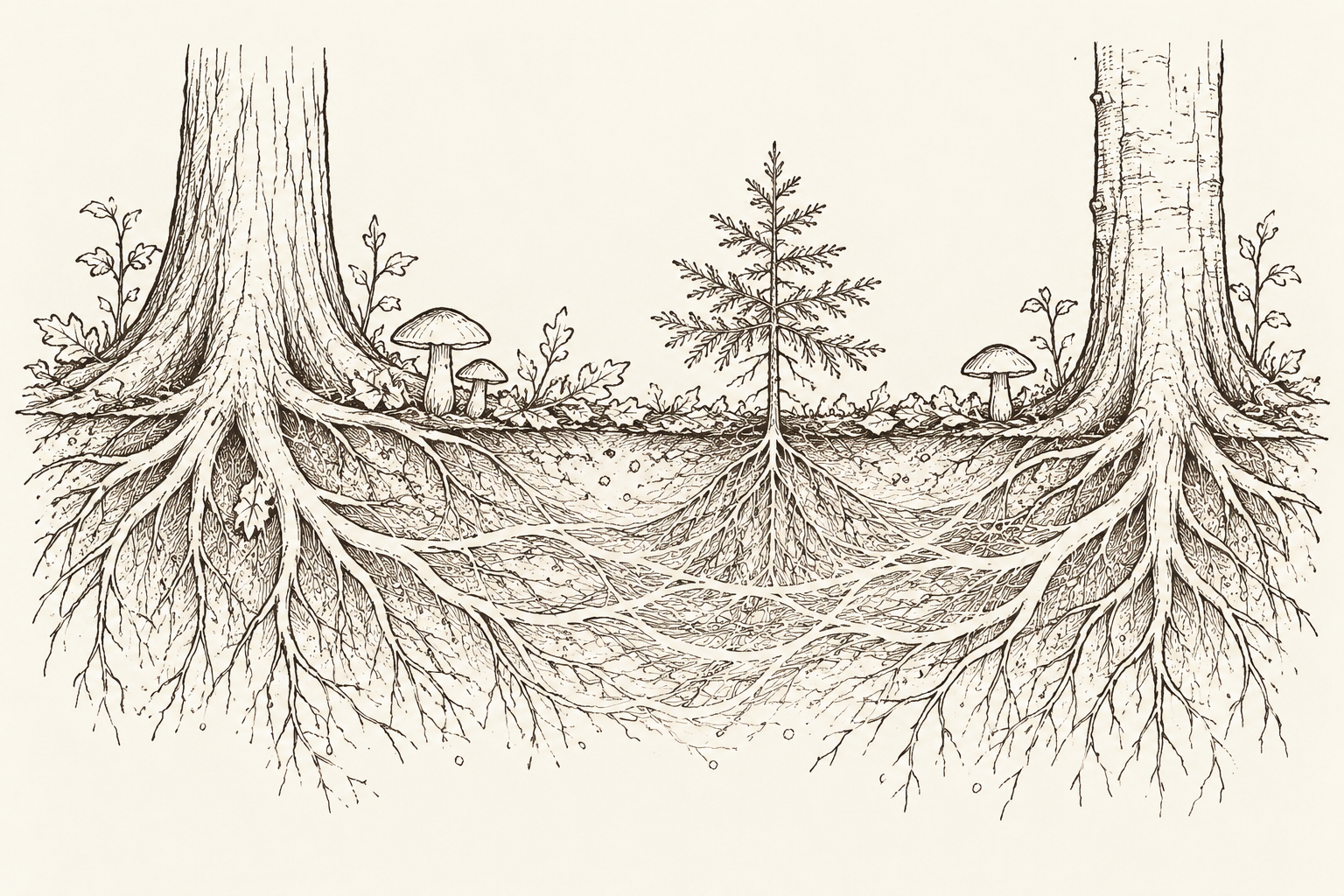
There's real science behind part of this story.
Some fungi form common mycorrhizal networks, meaning their fungal filaments connect the roots of multiple plants.
Scientists have also studied the movement of carbon and other resources between plants in systems involving fungi.
But here's where things become complicated.
A connection doesn't automatically mean two trees are helping each other.
And detecting movement of a resource doesn't necessarily tell us how it moved, whether the receiving plant benefited, or whether the transfer was somehow directed.
In 2023, researchers Justine Karst, Melanie Jones, and Jason Hoeksema reviewed several popular claims about common mycorrhizal networks.
They concluded that evidence was insufficient to support broad claims that these networks are widespread throughout forests or that transfers through them generally improve seedling performance.
They also found no peer-reviewed, published evidence for the particularly popular claim that mature trees preferentially send resources and defense signals to their own offspring through these networks.
Which is a little awkward for the heartwarming mother-tree story.
But I don't think it makes forests any less wonderful.
Quite the opposite.
Consider what we actually know.
Fungi form intricate relationships with plant roots. Some fungal networks connect multiple plants. Nutrients and carbon move through complicated biological systems. And scientists are still investigating how these relationships operate in natural forests.
That's extraordinary.
We just don't need to imagine every tree as a benevolent woodland grandmother to appreciate it.
Something to notice: When you see several trees growing close together, remember that their roots may be interacting with some of the same soil organisms. The precise relationships are invisible from the trail—and that's part of the mystery.
The most interesting scientific answer is sometimes, We don't know yet.
Which is frustrating when you're trying to finish a research paper.
But rather exciting when you're curious about the world.
The Forest You Walk Into Next Time
Here's what I love about all of this.
Nothing about the forest has changed.
The mushrooms were already there. The nurse logs were already growing little trees. The ghost pipes were quietly conducting their unusual nutritional arrangements long before we came along to investigate.
But now you know what to look for.
- A mushroom might be the visible reproductive structure of a much larger fungus.
- A pale flower might be obtaining carbon through a fungal relationship rather than photosynthesis.
- A fallen tree might be supporting the next generation of the forest.
- And a few stubborn brown leaves could lead you down an entire rabbit hole about plant physiology.
I particularly love the nurse logs.
There's something wonderful about discovering that an old, decaying trunk can leave traces of its existence in the shape of trees growing decades later.
You could walk past those strange roots a hundred times without knowing what they meant.
And then one day, someone explains it.
Suddenly, you're looking at the remains of a story you didn't know was there.
That's one of my favorite things about learning.
The world doesn't necessarily become more complicated.
It becomes more detailed.
So the next time you wander through a forest, don't worry about identifying every species or remembering every scientific term.
Just look for something peculiar.
A mushroom growing from a log.
A tree standing on oddly elevated roots.
A plant that seems to have misplaced all its green.
And if you discover something you can't explain?
Wonderful.
You've found another drawer to open!